There comes a point when you stop thinking of animals as “pets” and begin realizing they are family members with personalities, emotions, fears, preferences, and relationships of their own. That is where this story begins. Over the last fifteen years, every cat I have taken into my home has been a rescue. Every single one of them had been abandoned, discarded, forgotten, or left to survive on their own as kittens. Some arrived frightened. Some arrived sick. Some arrived emotionally damaged in ways people do not always recognize in animals. But once they realized they were safe, fed, warm, and loved, something extraordinary happened. They became family. And family changes the way you think.
You begin asking deeper questions. You stop wondering, “How little can I do to keep them alive?” and start wondering, “How much richer can I make their lives?”
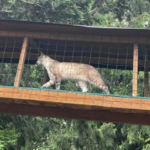
That question eventually led me to build what cat lovers affectionately call a catio — an enclosed outdoor playground for cats. But this was not just a little screened porch with a scratching post. This became an entire feline adventure world.
At first, I experimented with different layouts and smaller designs. Some worked better than others. Cats are interesting that way. They immediately let you know whether your idea is brilliant or ridiculous. Eventually, after enough observation, enough trial and error, and enough watching cats behave like tiny jungle panthers trapped in suburban life, I came up with a design that truly worked.
It was expensive to have custom-built, although honestly, an average do-it-yourself person could probably create something very similar with patience, creativity, and basic construction skills.
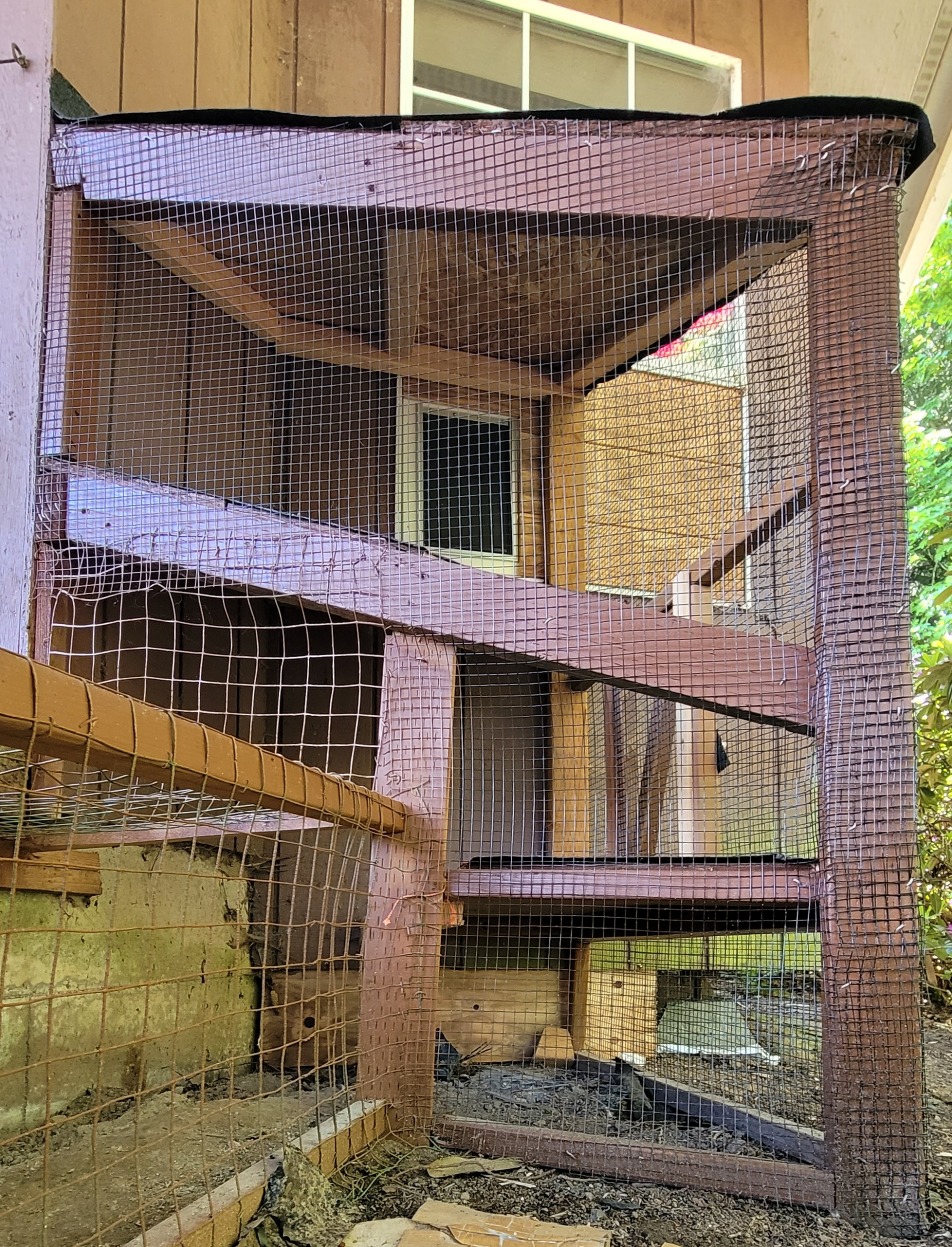
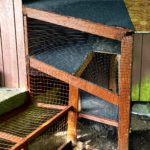
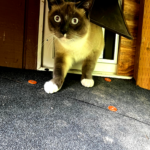
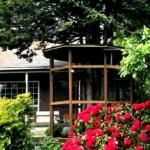
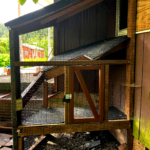
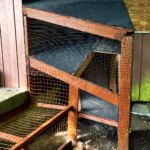
The structure begins with a three-foot by four-foot tower attached directly to a window of the house. A swinging cat-door allows the cats to move freely between indoors and outdoors whenever they want. Inside the tower are several climbing levels and platforms because cats do not simply move horizontally — they live vertically.
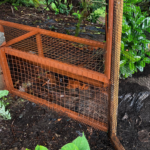
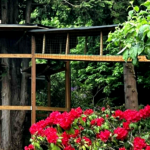
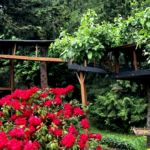
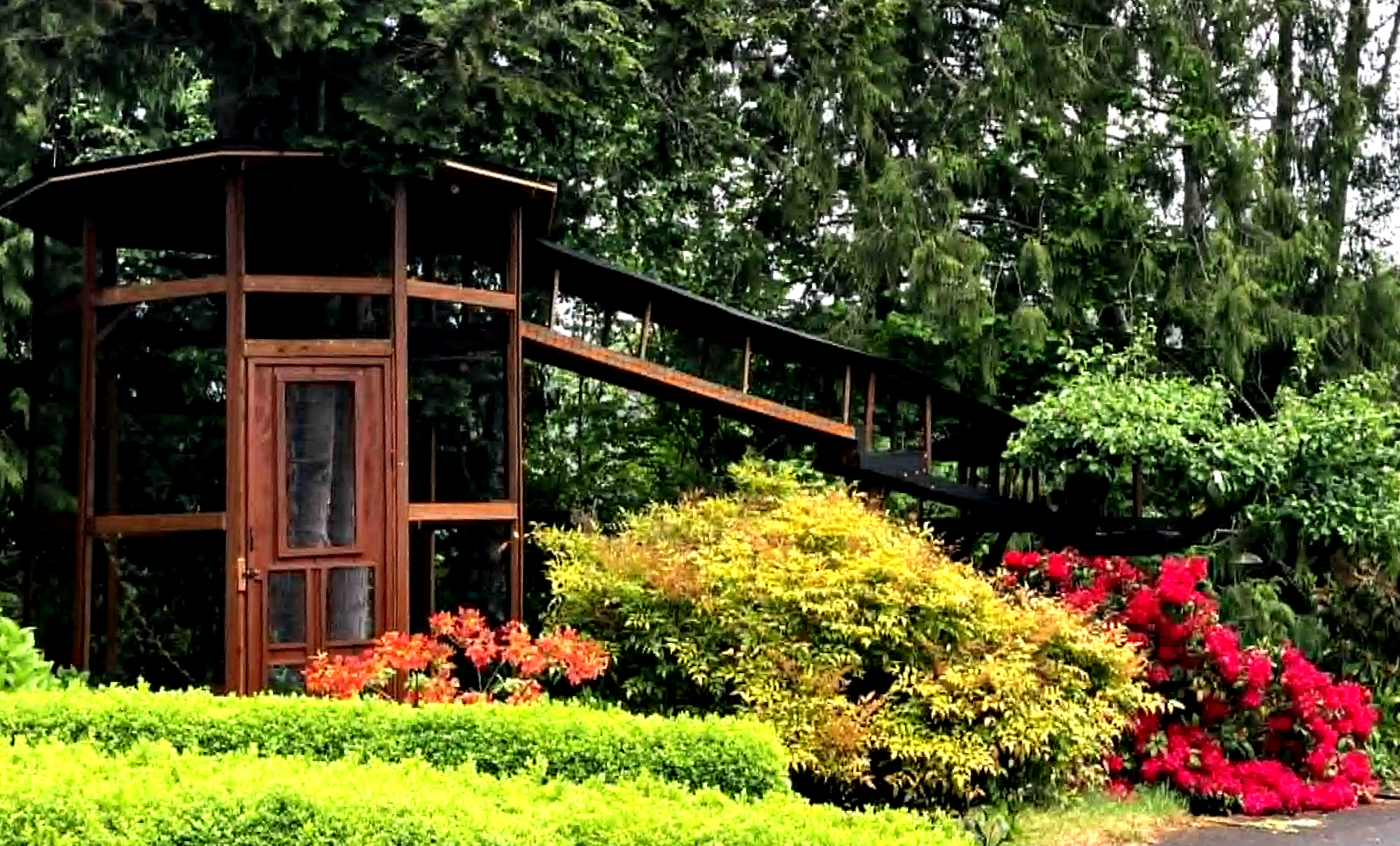
From there, the cats travel through an enclosed eight-foot crawl tunnel that leads into the centerpiece of the entire project: a twelve-foot-tall octagon built around a living natural tree.
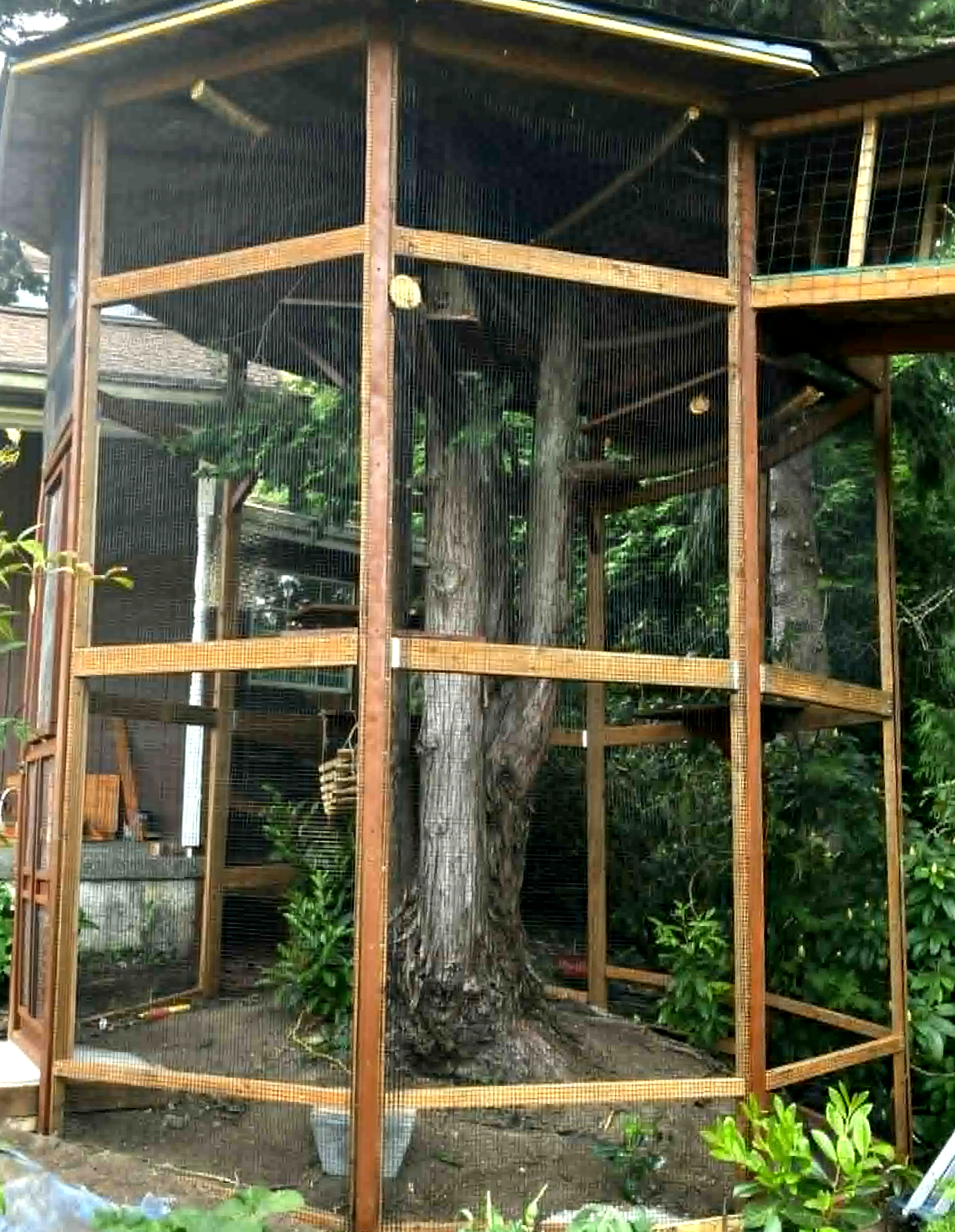
That tree changed everything.
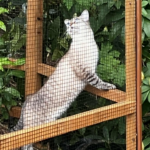
The moment the cats realized there was an actual tree inside their protected outdoor structure, their instincts awakened. Suddenly, they were climbing, hiding, leaping, stalking, balancing, and surveying their kingdom from elevated perches like miniature lions overlooking the savannah.
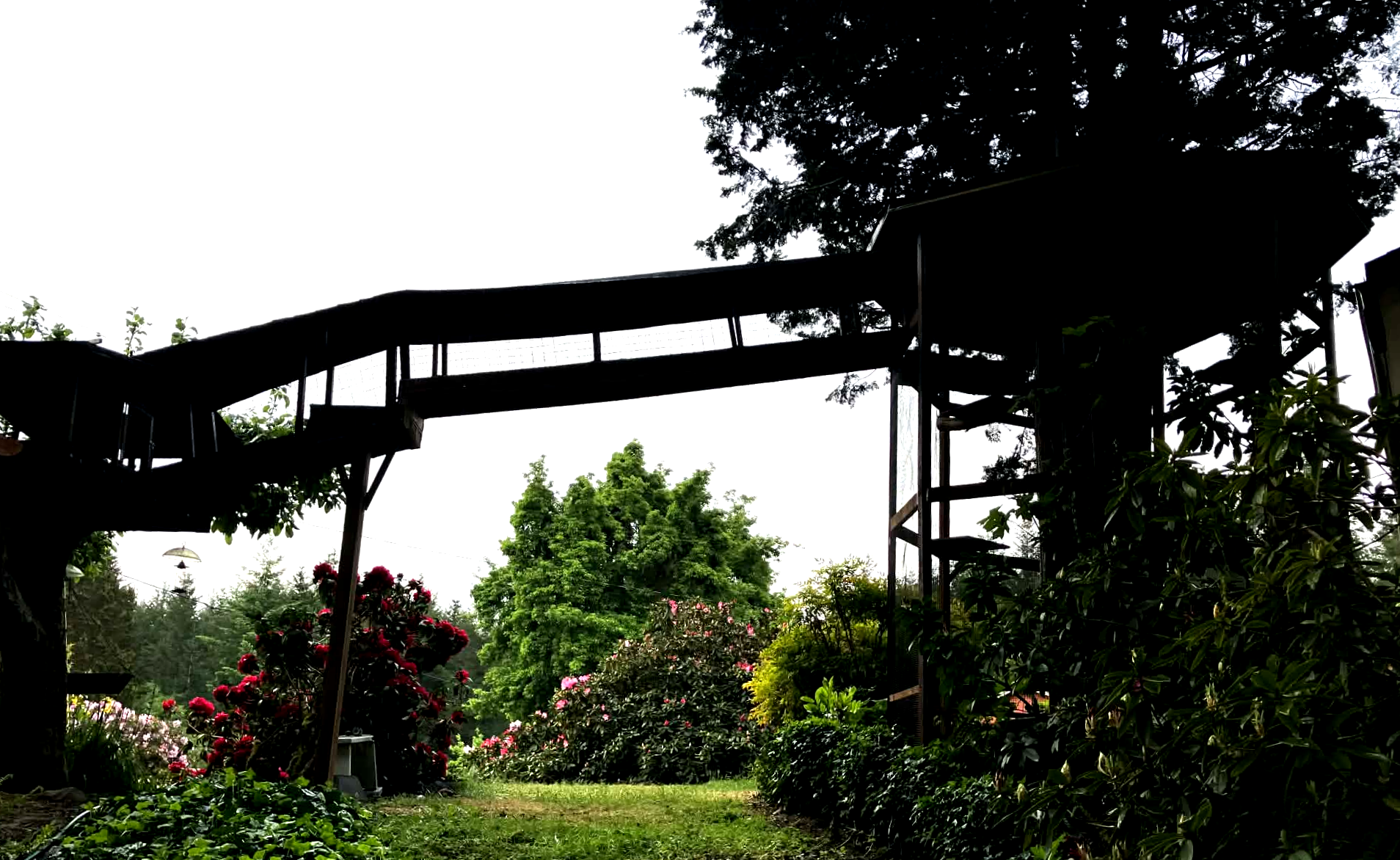
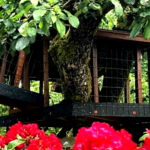
On the opposite side of the octagon is another enclosed tunnel system — this one approximately sixteen feet long and nine feet high — connecting to a six-foot by four-foot cat treehouse. The treehouse includes resting shelves, lookout points, shaded areas, and places where cats can simply observe the world in safety.
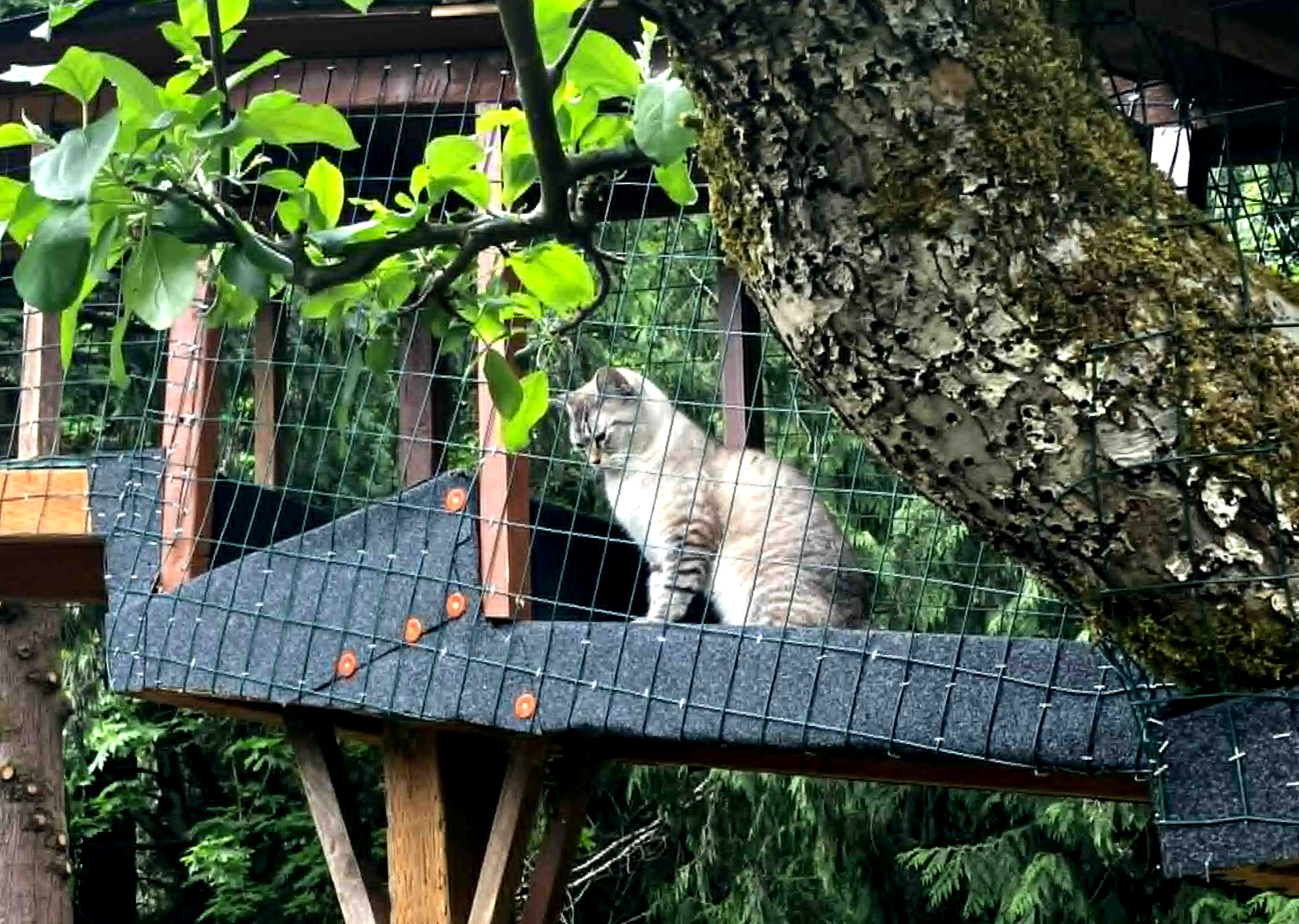
To humans, it may sound elaborate. To cats, it feels like freedom. And that was the point.
Indoor cats live longer lives, but many people quietly wonder whether indoor life is emotionally fulfilling enough for an animal born with instincts to climb, hunt, explore, and patrol territory. I wondered that too.
I wanted my cats to experience challenge. I wanted them to feel the wind. I wanted them to smell rain coming before it arrived. I wanted them to hear birds, rustling leaves, and distant sounds from the woods. I wanted them to have adventure. But I also wanted them alive.
Where I live, nature is beautiful, but it is not gentle. Coyotes roam nearby fields and roadsides. Raccoons can become aggressive and territorial. Eagles circle overhead searching for movement. Hoot owls hunt silently at night. Mountain lions occasionally pass through the area. And then there is the road in front of the house. That road has broken my heart more than once.
Over the last twenty-six years, I have lost cats to traffic. People drive fast on country roads. Sometimes they never even see the animal. Sometimes they do see them and cannot stop in time. Anyone who has ever loved a cat deeply knows the particular ache of waiting for one that never comes home. That kind of loss changes you. It makes you determined. It makes you protective.
So, the catio became my compromise between freedom and safety.
The cats can climb. They can leap. They can patrol. They can bask in sunlight. They can watch squirrels and birds. They can sleep in elevated outdoor spaces. They can feel like cats. But predators cannot reach them. Cars cannot hit them. And I can sleep at night knowing they are protected.
Some people may think this is excessive effort for animals. I disagree completely.
Cats give something back to us that is difficult to explain unless you have experienced it yourself. They become emotional companions. Quiet guardians. Little sentient beings that somehow always know when you are sad, sick, anxious, grieving, or emotionally overwhelmed.
I know this sounds strange to some people, but I believe cats possess a kind of consciousness that humans still do not fully understand.
Cats are psychic.
Anyone who has spent enough time around them has seen things that are difficult to explain rationally. Cats know when someone is coming home before a car pulls into the driveway. They react to emotional tension before voices are raised. They sit beside grieving people without being called. They appear in moments of illness and emotional collapse like silent healers. And at night, I believe they protect us in ways we do not fully comprehend.
People laugh at that idea until they experience it.
Cats patrol homes at night. They listen while we sleep. They react to sounds humans never hear. They sense emotional atmospheres. Ancient cultures revered cats for reasons beyond rodent control. There was always something mystical associated with them.
Even now, when I watch my cats navigating these elevated tunnels and platforms under moonlight, I sometimes feel like I am observing creatures halfway between the domestic and the wild. The catio seems to awaken something ancient inside them.
What surprised me most was how quickly their confidence increased once the structure was completed. Timid cats became adventurous. Older cats became more playful. Nervous rescues became curious explorers. The structure provided enrichment, stimulation, exercise, and emotional engagement. It gave them purpose.
Modern indoor life can become repetitive even for humans. Imagine how it feels for an animal designed to explore territory and climb trees. The catio transformed their daily experience from passive existence into interactive living. And honestly? It transformed me too.
Building spaces for animals changes the relationship you have with them. You stop seeing yourself as an owner and begin seeing yourself as a steward — someone responsible for creating conditions where another living being can truly thrive.
This latest catio is now the largest and most robust one I have ever built. I currently have three attached to the house, each with different layouts and purposes, but this one feels special. Maybe because it combines safety with freedom. Maybe because it gives abandoned animals a life many people never imagined possible for rescue cats. Or maybe because watching joyful animals heals something inside humans, too.
That may be the real secret behind all of this.
Sometimes the creatures we rescue end up rescuing us right back.